
We live in a LinkedIn world where AI is often framed as the definitive game-changer - the tool that will boost productivity, spawn new products, elevate strategy, and showcase leadership in a fast-moving market. As engineering leaders and managers, we surf that wave, eager to show how indispensable the next AI initiative will be.
But here’s the catch: our social-media bubble can mask the rest of the story. Recent research shows a meaningful divide. A Pew Research Center poll found that ~80% of U.S. workers don’t use AI in their daily jobs and only 6% expect it to open new job opportunities for them, while 52% say they worry about what AI means. Meanwhile, a Gallup survey revealed that 33% of managers report frequent AI usage, vs 16% of individual contributors. These aren’t just stats. They’re early warning flags for any large-scale AI adoption.
Many individual contributors view AI through a different lens: as a top-down drive to replace jobs, oversimplify work, raise risk of bias or environmental harm, or magnify inequality. These aren’t fringe opinions. They’re real voices in alternative forums (like Reddit) and merit respectful attention.
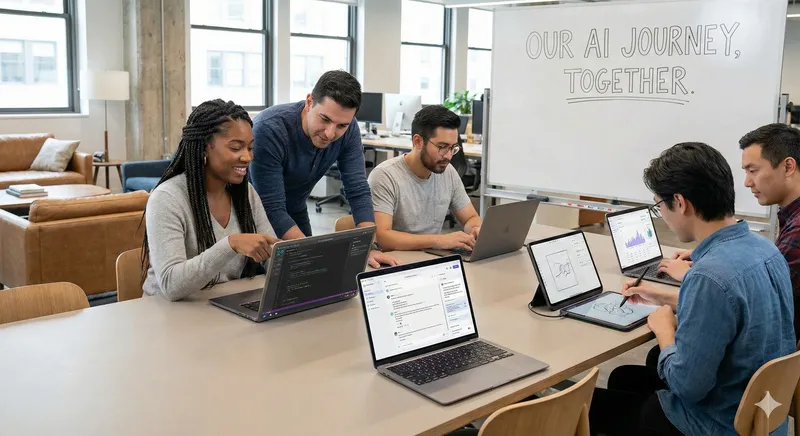
So the path forward isn’t hype; it’s empathy and inclusion. We need to elevate ICs from “subjects of AI change” to “explorers of AI change.” Let them lead pilot use-cases, teach peers, ask hard questions, and bring ground-level perspectives to the table. When they see AI coming from the grassroots and not just from leadership, trust and adoption will scale.
In short: step out of our own media echo-chamber. Engage the full spectrum of perspectives. Because if we want AI to truly deliver at scale, we must create a shared journey, not just announce a new initiative.